
Water Before the Next Oasis
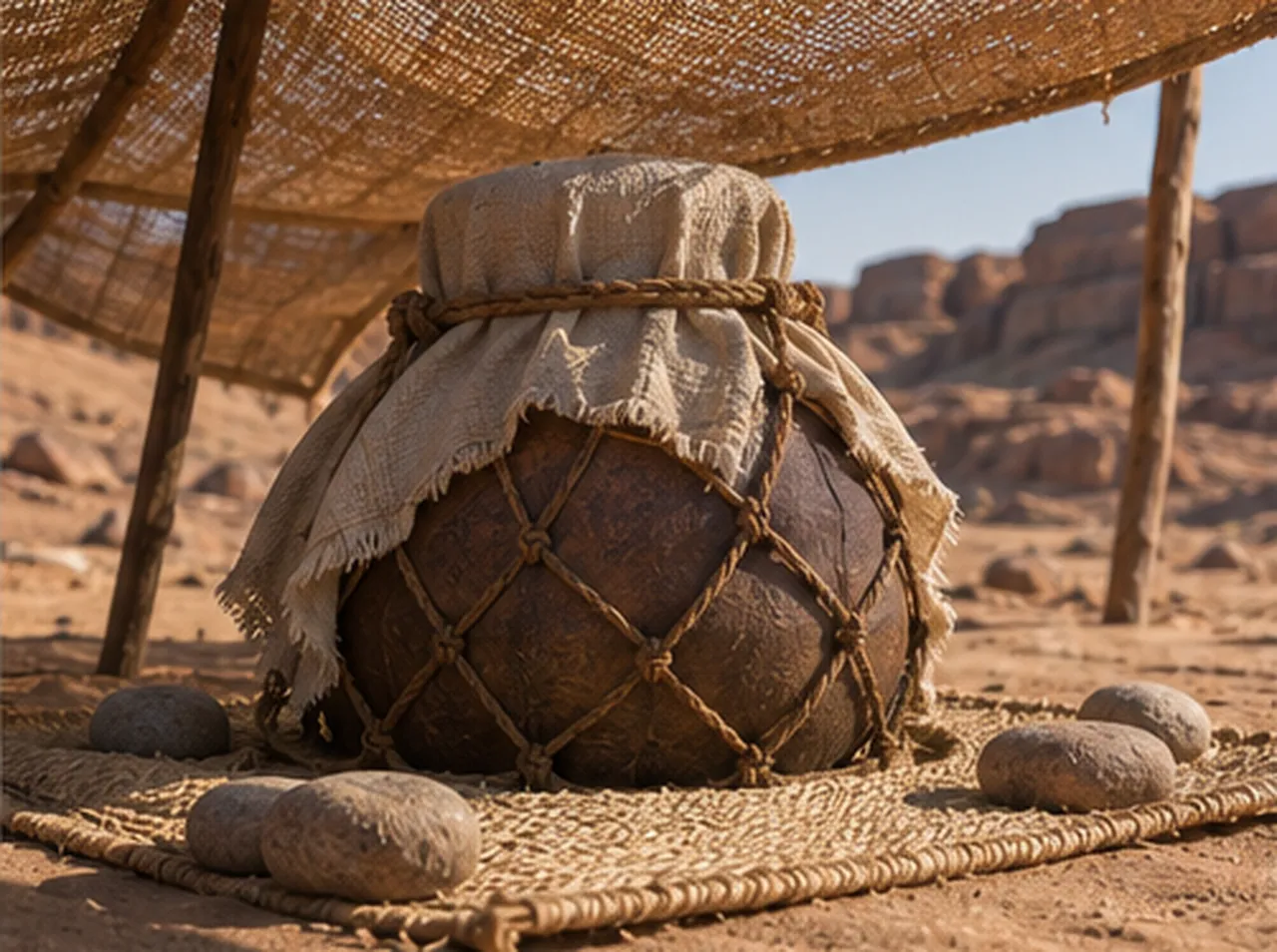
Open the cloth and plan the next stop
In this fictional caravan concept, a person looks at the rim of a pair of vessels before deciding which offer deserves a closer reading. The caravan has enough water for part of the crossing, an open space on one loaded animal and a small reserve that can already be reached. A stop in a dry valley offers one full vessel in return for a bundle from the rear of the line. Another offer moves part of the remaining supply into a narrower container and leaves the bundle aboard. Choosing between them involves the next stop as much as the immediate exchange.
Two Mouths of a Measure shows the clues drawn into the vessel shapes. A mark makes the current quantity visible from above, while a band identifies a width from the side. The trader can compare those views before touching either vessel. The useful story in the two drawings is the difference between having water and being able to get to it later. Give each description a visible place near a rim or a tie.
Choose only after the load can be drawn again
The player scans the departure route, inspects the displayed exchange and previews the new load on a small drawing. A preview can show that one container takes the place already used for a reserve. A player who chooses that offer can move the reserve before they depart. Doing so requires an extra stop at the edge of the cloth. The other offer leaves the original reserve on an accessible side but requires room in a narrow bracket. An awkward load will make it slower to reach a second vessel when the party stops again.
Each crossing uses an invented condition that can become important on the next leg. One trader allows the caravan to look at a replacement before deciding. Another asks for the bundle as soon as the available vessel is put beside the load. What the Woven Token Offers describes how a small game object can make a condition visible near the water. The full trade reading stays available while a player compares sizes.
Bring the important edge into shade
The picture uses rubbed ochre and a muted blue where objects sit beneath cover. A high side light makes the rim stand apart from the neck of a vessel. A simple embossed mark reads clearly before color can identify the object. In a wide view, the narrow container will give the pack a separate silhouette. That sign helps players recognize their choice while the caravan is walking. We will test whether moving a vessel to the other side of the pack affects the clarity of both markings.
What to test in a route prototype
The sequence is in concept and prototype development. A small trial needs one trade, two possible arrangements and a short next leg that uses the chosen setup. A player can go back to the trade without repeating the whole approach. The initial reserve remains visible when the new arrangement is previewed. After playing, someone should explain why the container they brought can or cannot be reached at the next stop. A later version can explore a decision about stopping before dark. The game uses fictional quantities and exchange rules for play.