
Cargo That Walks at Night
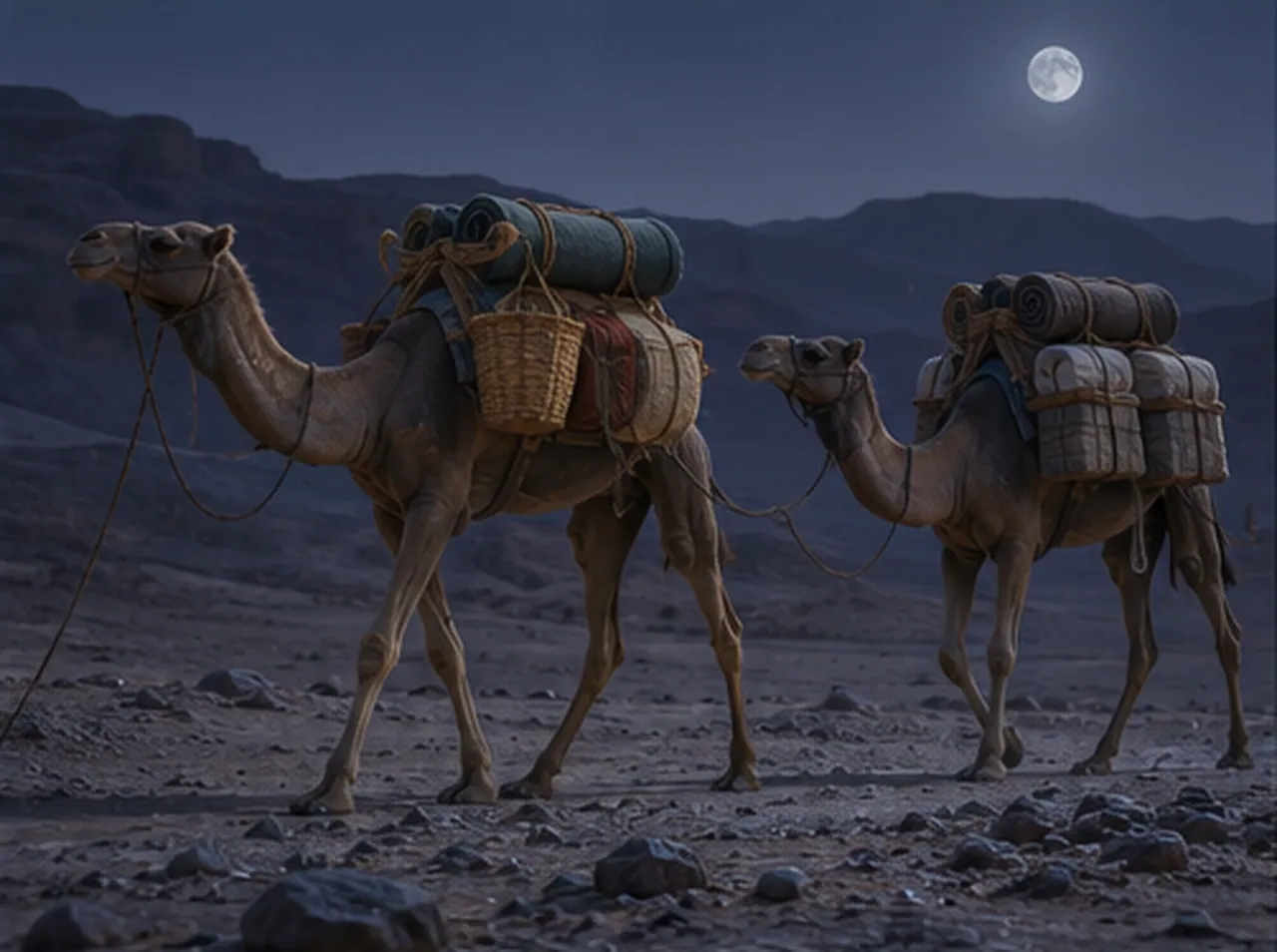
Follow a smaller view of the caravan
The last people leaving a valley have a clear view of the high dunes for a while. After the light changes, they make out the closest load and a narrow strip of track. This original concept follows the person charged with looking after the supplies at the back of the line. The role is to decide which baggage must remain easy to reach and how to show other travelers where the rear has turned. There are a few familiar marks on the packs and two possible paths through a stretch of shadow.
A tall roll can carry an extra bundle, and that benefit is visible without opening it. Its height also hides some of the back marker when seen from near the inside of a turn. Move a fold of cloth sideways and it keeps both ties in reach, but extends into a place where walkers can pass. The player can test where to stand and see a short view before confirming a load. Marks at the Back of the Line examines how the drawing relates the marker to a person at two positions.
Arrange, walk and check a likely stop
The person at the back selects what needs to be available for an expected stop, ties it onto an accessible side and chooses a marker appropriate for the line. Then the travelers follow one section of path. A shift in the wind can make the near edge of the valley easy to see while the distant bend grows harder to read. It provides a reason for another look at the setup. Reaching inside a pack takes longer than calling a person walking next to an accessible tie. The player can choose a planned wait or accept time lost while finding a place to move.
The night walk offers a decision between a flatter stretch and a narrow opening near a ridge. Space and visible distance matter differently in those two places. A wider load costs time where people need to pass one another. A lower load can make a shared marker readable in the dark part of the bend. Carry the Cool Hours looks at how the expected position of a stop affects what an apprentice traveler might choose to keep close.
The moving gaps are part of the picture
We use a cooler blue for the floor of the valley, with a reflected edge on the shoulder of an animal. The silhouettes of the packs need enough space to show which person owns a tie. The rear marker takes a light edge and has a cut into the top, so the shape remains identifiable if the material has little color in the last light. A distant view can keep the strip of space between two packs brighter than the surfaces facing away. After the rear turns, the arrangement should read as the same line from a new place.
Build the two turns first
This game is being explored through early prototypes. A narrow first test covers the same night segment with two pack heights. After a crossing, the player explains where they first saw a useful marker and which supply they could reach without moving the largest bundle. A simple retry starts at the last known observation point and keeps the loading choice visible. When a position changes, the prototype needs to explain the next available view through movement and spacing instead of showing a summary with a better time.