
Carry the Cool Hours
Put a possible stop into the bag plan
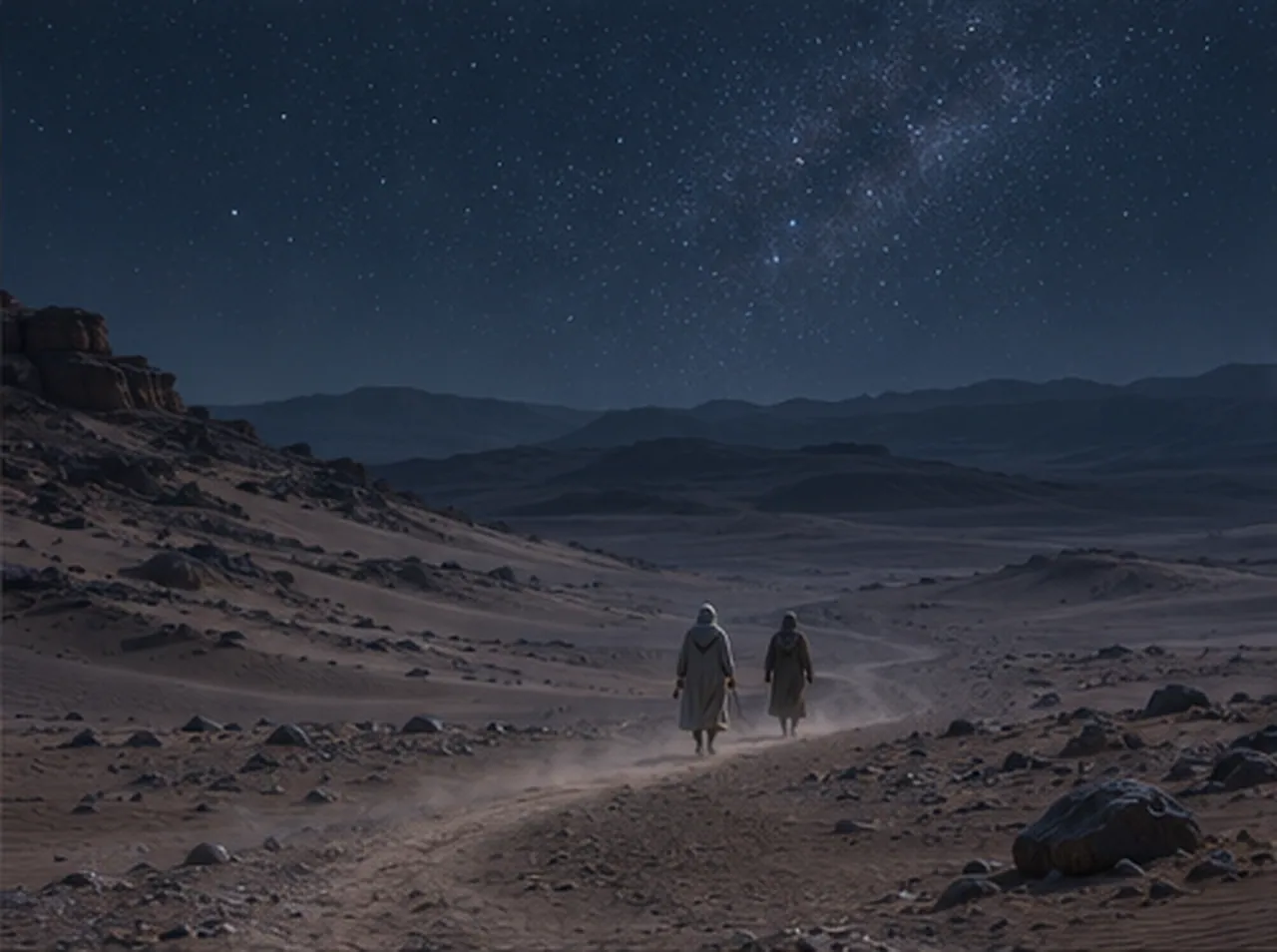
Cargo That Walks at Night begins before the temperature and light have changed in an invented valley. The people at the back of the line can identify their own loads and put aside objects that might be useful when they stop later. Once walking, a high pack makes a different view available than a wide pack. We needed to ask how an expected stop could affect that choice without showing an exact future route on the map. The first trial places a known low shelf near one bend and an open space farther down another route.
Each path gives the player a different amount of space. Near the shelf there is room to stop only as long as people can pass in the remaining lane. At the farther space, a driver can wait beside a pack and reach a tie at the back. A large container can fit there but will still waste time if buried. The choice the player can see before dusk is where the most useful reserve can be reached. That decision should be expressed through the views of the pack they already use to check their ties.
Turn a supply choice into something the party can observe
An earlier design gave the player a list of counts. A walk to the chosen site then advanced for several moments and displayed a line saying what remained. That can serve as a summary but it hides a good opportunity to reason about accessibility. A shallow bundle with an ochre tie can make the right place to reach visible in the shadow of a larger one. At the next stop the player can check which side faces the walk. If someone else needs the same spot, the reserve can still be taken from a different angle.
A drawing from overhead shows what a person might rest against while reaching. At shoulder height, a broad loop along the side of the pack helps them see how to move past it. These views should tell the same story about the gap required. A loaded caravan can keep some supports visible on both sides by leaving openings between packs. A trial can ask a person to identify which supply they would prepare while the leading animal is still moving and which one they should leave for the more open stop.
Keep a measure for the available time visible
The length of a cooler stretch of walking can be expressed by consecutive silhouettes of the valley. We want to compare an attempt where the caravan stops at the bend with one where it keeps moving. Use a fixed row of ledges that gradually enters the view. A person can remember the edge of a particular ledge as a place they might have waited when the trip is replayed. The usual view should still have room for a moving pack and for the person carrying the closest tie. A strong sky tone helps people read the edges without a bright panel covering the pack.
Bring the night cue back to the stop
Marks at the Back of the Line is a smaller study of a visible feature on a rear pack. If the marker remaining visible suggests how the last person can keep a safe space at a turn, the supply position suggests where they can take advantage of that space. A later pass might reveal that the best tie for a stop interferes with the clearest marker. In that situation the player has a concrete reason to spread something out or choose the next available place to wait.
The trial can end with the player looking at a familiar load from close range. Ask what the dark changed about their choice, and which supplies could already be moved before night fell. If the story depends on a pair of numbers only visible in a table, check the views of the pack again. The intended scene gives a close reason for reaching for a specific object while another still keeps its shape behind it.